FIELD 01 / 07
Joints & osteoarthritis
Knee osteoarthritis; other joints require their own evidence.
MFAT trials · mixed results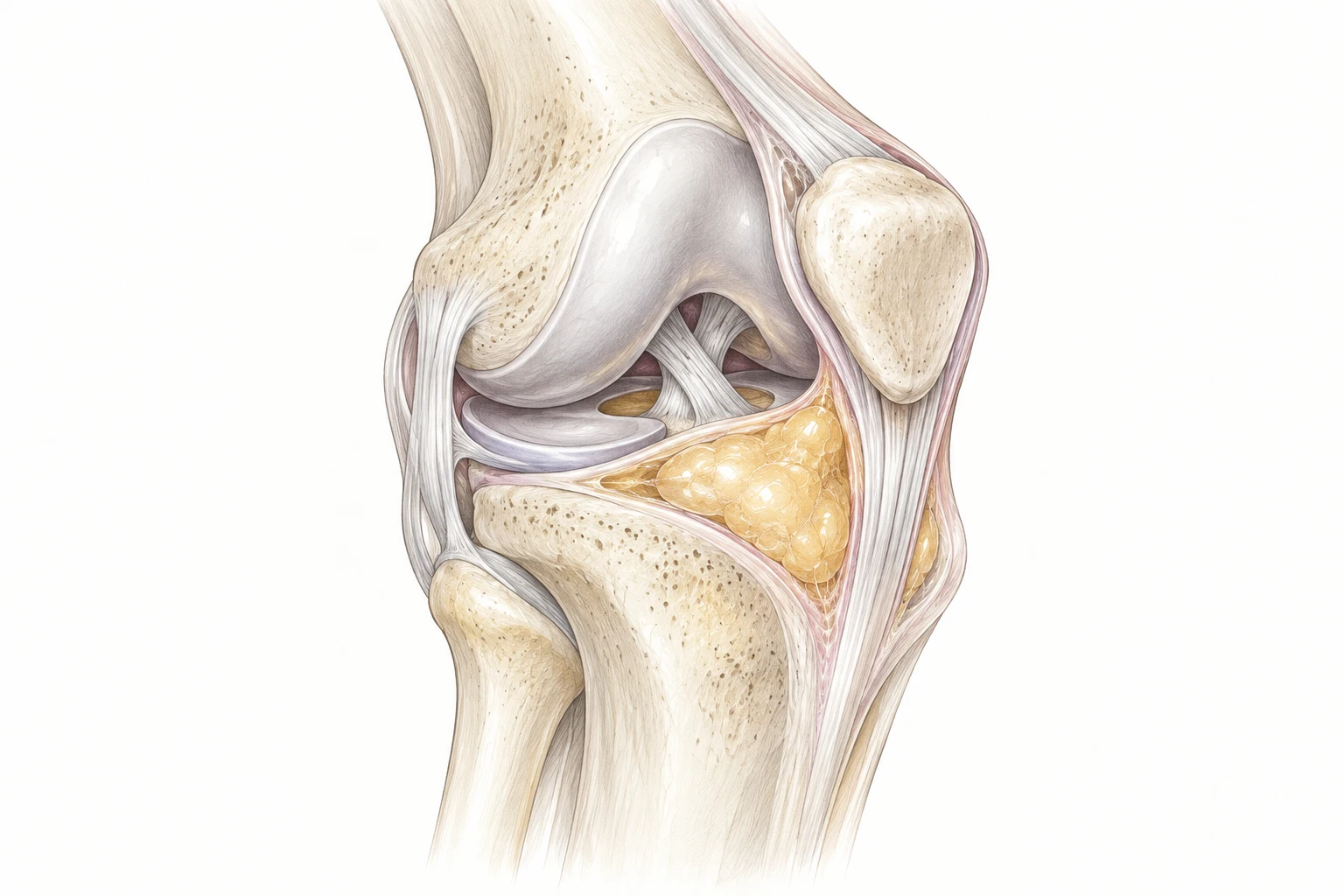
THE CLINICAL AIM
Reduce joint pain and improve daily function in a defined osteoarthritis population.
Symptom relief, function and the value of an added procedure.
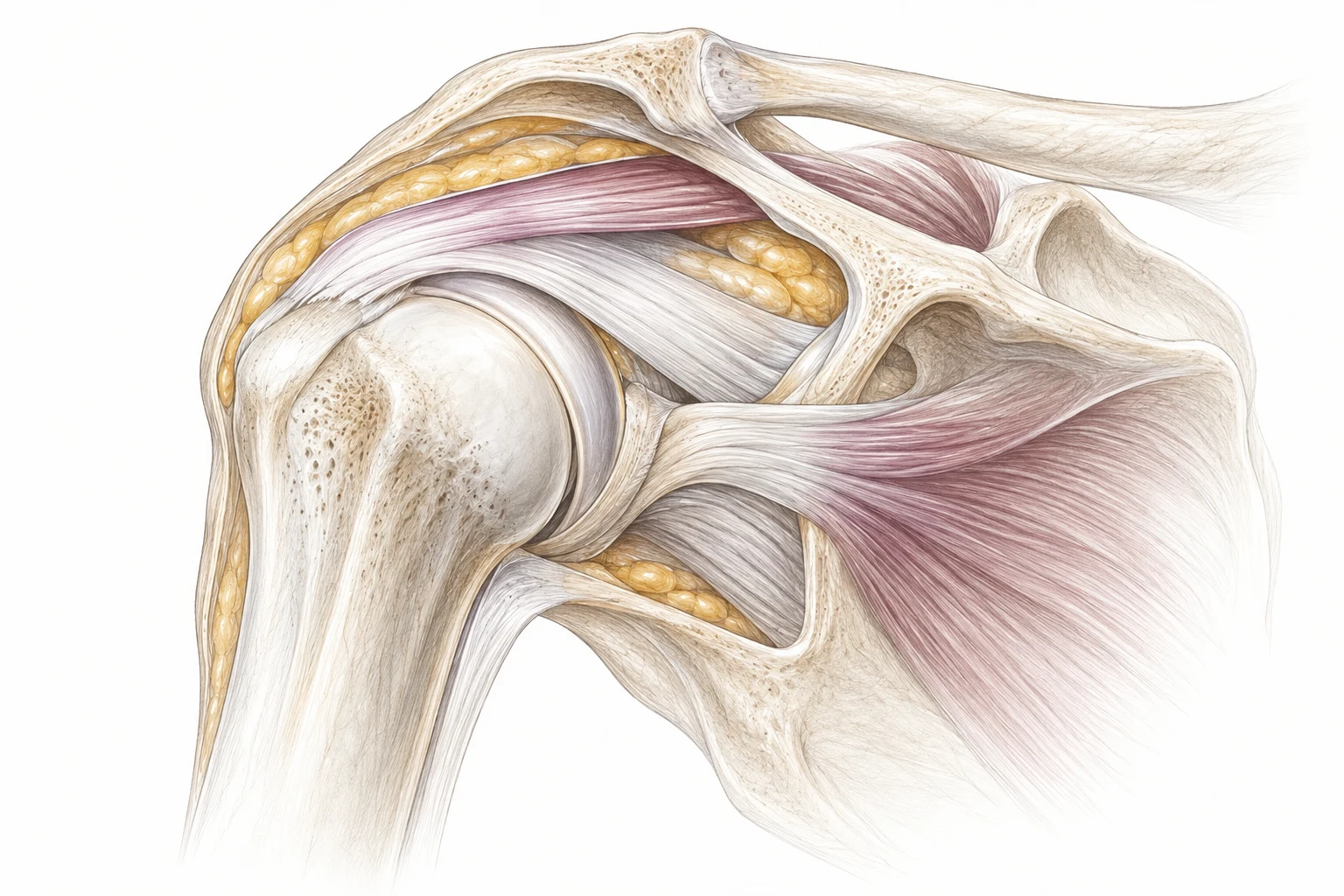
MFAT has been investigated as an intra-articular intervention for symptomatic knee osteoarthritis. The relevant outcomes are pain, daily function and quality of life. Symptom improvement and cartilage restoration are different claims.
The research hypothesis concerns local tissue signalling and modulation of the joint environment. It is different from claiming that injected tissue directly rebuilds cartilage.[3]
What the studies report
A positive saline-controlled trial
75 randomized · MFAT / saline / corticosteroid · 12 months
Richter and colleagues randomized 75 patients among MFAT, corticosteroid and saline. The partially blinded study reported better pain and functional outcomes with MFAT than saline through one year.[4]
A larger placebo-controlled trial
120 randomized · MFAT versus saline · 24 months
Barfod and colleagues randomized 120 patients, with adipose harvest in both groups. MFAT did not outperform saline at the assessed time points over two years; both groups improved.[5]
A newer active-comparator trial
60 randomized · MFAT versus triamcinolone · 12 months
A 2026 double-blind trial of 60 patients reported more sustained improvement with MFAT than triamcinolone at 12 months. Its comparator and population differ from the saline-controlled studies.[6]
Comparison with another orthobiologic
71 randomized; 49 completed · MFAT versus PRP · 12 months
Baria and colleagues found improvement in both groups, with no significant difference in KOOS pain at twelve months. Loss to follow-up limits interpretation. A nonsignificant difference does not by itself prove equivalence or superiority.[21]
What this may mean clinically
Several trials report pain and functional improvement, but comparative results are inconsistent. The clinical discussion should weigh the possible symptomatic benefit, the fat-harvest procedure and alternatives. The current evidence does not establish that MFAT is routinely better than PRP.
Where the evidence stops
These studies do not establish predictable cartilage regrowth, reversal of osteoarthritis or avoidance of joint replacement. Knee findings should not automatically be extended to hip, ankle or hand conditions.
Standard-care context: therapeutic exercise and, where appropriate, weight management remain central to osteoarthritis care. An MFAT discussion should not displace those measures.[24]